
Written by Dr Elaine O’Connor-Haq, MB BCh BAO, MPharm, L7Dip(Aes)
Medical Aesthetics Doctor and founder of Bespoke Medical Aesthetics, Colchester
Restoring Radiance with Regenerative Aesthetic Medicine
As we move through our late twenties and beyond, skin begins to lose firmness, elasticity and luminosity. Collagen production declines by around 1 per cent each year, while levels of hyaluronic acid, the molecule responsible for hydration and suppleness also diminishes. Fibroblasts, the cells that make collagen and elastin, become sluggish, leading to skin that looks dull, thin or crepey.
At Bespoke Medical Aesthetics in Colchester, we’re seeing a growing demand for subtle, regenerative treatments that restore skin health from within, rather than masking signs of ageing. Among these, polynucleotides stand out as one of the most exciting innovations in modern aesthetic medicine.
What Are Polynucleotides?
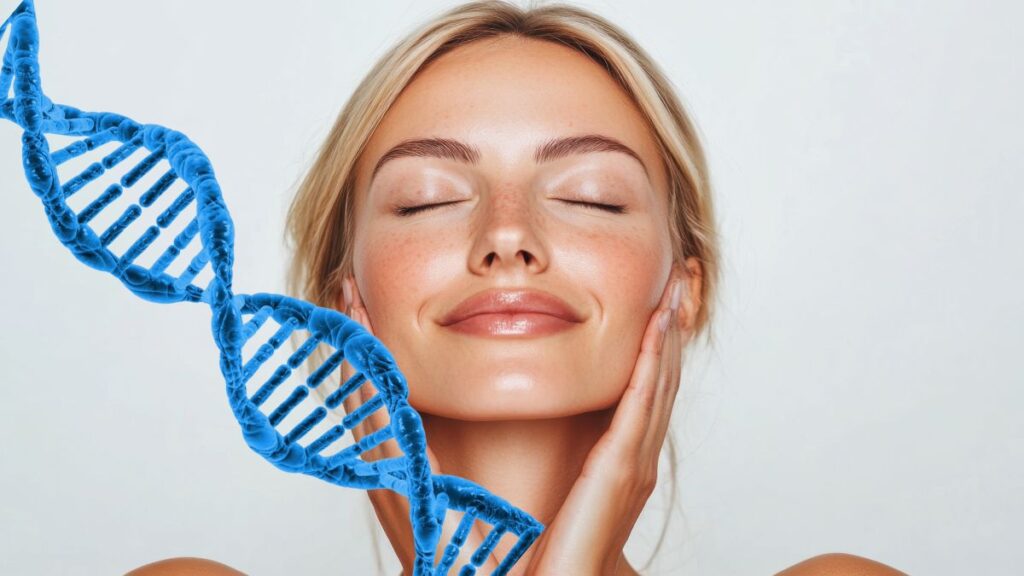
Polynucleotides (PNs) are naturally derived biopolymers composed of DNA fragments. Originally developed for wound healing and tissue repair, they are now widely used in aesthetic medicine as injectable skin boosters.
Unlike hyaluronic acid (HA) products, which primarily hydrate the skin by attracting water molecules, polynucleotides go a step further, they stimulate fibroblasts, promote collagen and elastin synthesis, and enhance tissue regeneration. The result is skin that looks not only smoother and more hydrated, but biologically younger.
The Science Behind Skin Regeneration
From our late twenties, our skin begins to lose around 1% of its collagen each year, while hyaluronic acid levels and fibroblast activity also decline. These changes lead to dryness, fine lines, reduced elasticity, and an overall loss of luminosity.
“Polynucleotides work at a deep cellular level to restore hydration, boost collagen and elastin, and repair UV-damaged skin. By reawakening fibroblasts and enhancing DNA repair, they promote firmer, smoother, and more radiant skin from within.”
Polynucleotides work at a deep cellular level to counteract this process. Derived from purified DNA fragments, they act as biostimulators, activating fibroblast receptors and encouraging these key skin cells to produce more collagen, elastin, and hyaluronic acid. This results in firmer, more hydrated, and visibly rejuvenated skin.
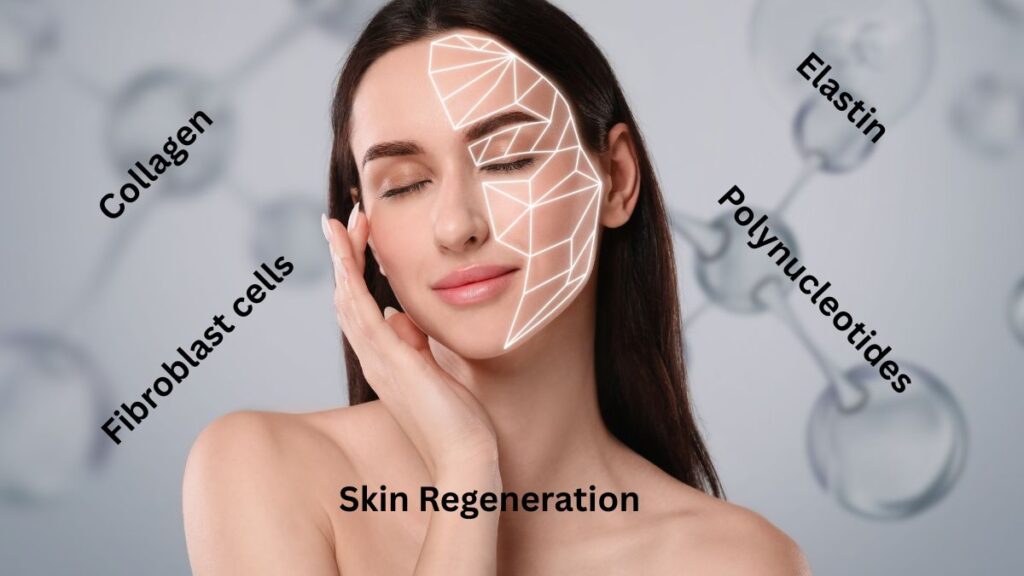
Polynucleotides also enhance cellular repair and renewal, supporting the replacement of damaged skin cells with healthier ones. Their anti-inflammatory properties help calm irritation, making them particularly beneficial for stressed or sensitive skin. In addition, research shows they can assist in repairing photoaged skin by promoting DNA repair mechanisms, helping to reverse some of the effects of UV-induced damage.
Overall, this regenerative cascade improves skin tone, texture, and hydration, while promoting long-term skin health from within and not just at the surface.
Where Polynucleotides Can Be Used
Polynucleotides can be used across multiple areas of the face and body to restore hydration, elasticity, and skin quality. They are especially effective in delicate or previously difficult-to-treat regions such as:
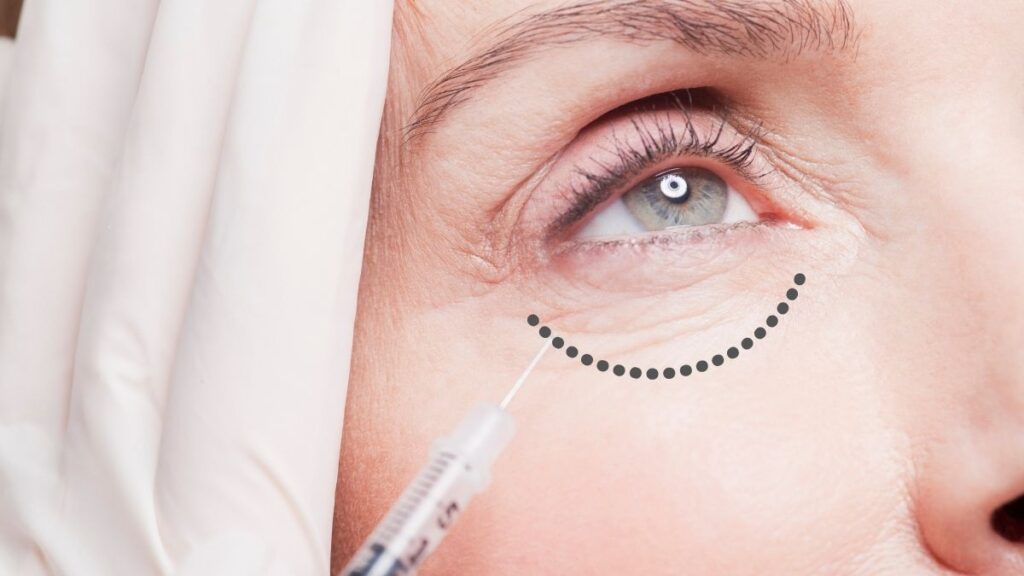
- Under-eye area – improving fine lines and crepiness.
- Face and neck – restoring firmness and radiance.
- Décolletage – smoothing and rejuvenating sun-damaged skin.
- Hands – enhancing texture and hydration.
- Scalp – supporting hair follicle health and improving density.
Some formulations combine polynucleotides with hyaluronic acid (HA), providing a dual effect: the polynucleotides stimulate deep cellular repair and collagen production, while the HA immediately enhances hydration and suppleness.
Evidence-Based Benefits and the Importance of Choosing a Qualified Practitioner
When selecting any injectable treatment, doing your due diligence is essential. The [NHS guidance on non-surgical cosmetic procedures] advises ensuring your practitioner is medically qualified, properly insured, and registered with a recognised body.
At Bespoke Medical Aesthetics, your treatment is performed by Dr Elaine O’Connor-Haq, a GMC-registered medical doctor with a Level 7 Diploma in Aesthetic Medicine (Harley Academy). The clinic is Hamilton Fraser-insured and registered with the JCCP, giving you the reassurance of clinical expertise and ethical practice.
Recent systematic reviews support the clinical effectiveness and safety of polynucleotide injections in aesthetic practice, highlighting improved skin texture, elasticity and radiance with minimal downtime (Lampridou et al., 2024; Lee et al., 2024).
Comparing Skin Boosters Available at Bespoke Medical Aesthetics
| Treatment | Key Ingredients | Primary Action | Best For |
| Profhilo® | Pure hyaluronic acid (HA) | Deep hydration + collagen stimulation | Crepey or lax skin |
| SkinVive™ | Micro-droplet HA with glycerol | Improves smoothness & glow | Dull, dehydrated skin |
| Polynucleotides | DNA biopolymers | Fibroblast activation & tissue repair | Skin quality & texture |
| HarmonyCa™ | HA + calcium hydroxyapatite | Lift + collagen stimulation | Mid-face volume loss |
| Sunekos® (coming soon) | HA + amino acids | Collagen & elastin regeneration | Eye area & fine lines |
| Exosomes (Purosomes) (coming soon) | Cellular vesicles from stem cell culture | Regenerative signalling & repair | Advanced skin rejuvenation |
Each of these skin boosters offers unique benefits, and the right choice depends on your individual skin goals. Sometimes skin boosters may be used synergistically as part of a treatment plan, e.g. Skinvive and polynucleotides [See our Skin Boosters Explained blog] for a full overview.
Treatment Experience: What to Expect
After a detailed consultation, Dr Elaine will assess your skin health, lifestyle, medical history, and treatment goals. Polynucleotide injections are delivered using micro-injections into targeted areas. The procedure is typically 20–30 minutes in duration.
You may experience mild redness or swelling for a few hours, but downtime is minimal. Optimal results are achieved after a course of 2–3 sessions spaced a few weeks apart. Improvements continue over time as new collagen and elastin form, giving a naturally refreshed appearance without altering facial expression.
Safety and Realistic Results
Polynucleotides have an excellent safety record, with decades of use in regenerative medicine and ophthalmology. Adverse effects are rare and usually limited to mild transient redness or swelling at injection sites.
Results develop gradually, with visible improvement typically within 2–4 weeks and optimal outcomes at around 8–12 weeks. Maintenance sessions every 6–12 months can help sustain results.
At Bespoke Medical Aesthetics, treatments are always personalised. We prioritise natural enhancement and healthy skin function over overfilled or artificial results.
Why Choose Bespoke Medical Aesthetics, Colchester
Your skin tells your story, and our approach is to preserve your individuality while optimising skin health. Every treatment is grounded in medical science, lifestyle understanding, and artistry.
Dr Elaine O’Connor-Haq brings a background in both medicine and pharmacy, ensuring every protocol is evidence-based and biochemically sound. Our holistic approach integrates medical-grade skincare, regenerative injectables, and lifestyle advice to help you embrace your uniqueness.
[Explore our Polynucleotides page]
[Explore our Profhilo and SkinVive pages]
Ready to experience the regenerative power of polynucleotides?
Book your consultation today at Bespoke Medical Aesthetics, Colchester, to discover which skin booster best suits your skin goals.
Coming soon: Sunekos® and Exosome (Purosome) therapy, the next-generation skin regeneration treatments.
[Register your interest] to be the first to know when these launch.
FAQs About Polynucleotides:
Q1. What is a polynucleotide skin booster and how does it work?
Polynucleotides are injectable biopolymers derived from DNA fragments that stimulate fibroblasts, improve hydration, and support skin tissue repair, leading to smoother, more radiant skin.
Q2. How many sessions of polynucleotides are required and how long do results last?
Typically 2–3 sessions are needed for optimal results, with maintenance every 6–12 months. Improvements continue to develop for several weeks post-treatment.
Q3. Is there any downtime after treatment with polynucleotides?
Downtime is minimal — you may notice mild redness or small bumps for a few hours. Most clients return to normal activity the same day.
Q4. Are polynucleotides safe?
Yes. Clinical studies show excellent safety and tolerability, with minimal risk of adverse reactions when performed by qualified medical professionals.
Q5. Can polynucleotides be combined with other treatments?
Yes. They complement treatments like hyaluronic acid skin boosters, microneedling, and anti-wrinkle injectables, supporting overall skin regeneration.
References:
- Cavallini, M. et al. (2024) ‘Value and benefits of the Polynucleotides HPT™ dermal priming paradigm: a consensus on practice guidance for aesthetic medicine practitioners and future research’, Clinical & Experimental Dermatology & Therapies, 9:224. Available at: https://www.gavinpublishers.com/article/view/value-and-benefits-of-the-polynucleotides–hpt-dermal-priming-paradigm-a-consensus-on-practice-guidance-for-aesthetic-medicine-practitioners-and-future-research [Accessed 4 November 2025].
- Lampridou, S., Bassett, S., Cavallini, M. & Christopoulos, G. (2024) ‘The effectiveness of polynucleotides in esthetic medicine: a systematic review’, Journal of Cosmetic Dermatology, 24(2), p.e16721. doi: 10.1111/jocd.16721. Available at: https://pmc.ncbi.nlm.nih.gov/articles/PMC11845969/ [Accessed 4 November 2025].
- Lee, K.W.A., Chan, K.W.L., Lee, A., Lee, C.H., Wan, J., Wong, S. & Yi, K.-H. (2024) ‘Polynucleotides in aesthetic medicine: a review of current practices and perceived effectiveness’, International Journal of Molecular Sciences, 25(15), p. 8224. doi: 10.3390/ijms25158224. Available at: https://pmc.ncbi.nlm.nih.gov/articles/PMC11311621/ [Accessed 4 November 2025].
- NHS (2023) ‘Non-surgical cosmetic procedures’, nhs.uk. Available at: https://www.nhs.uk/conditions/cosmetic-procedures/non-surgical-cosmetic-procedures/ [Accessed 4 November 2025].
- Zouboulis, C.C., et al. (2012) ‘Skin anti-aging strategies’, Dermato-Endocrinology, 4(3), pp. 308–319. doi: 10.4161/derm.22804. Available at: https://pmc.ncbi.nlm.nih.gov/articles/pmid/23467476/ [Accessed 3 November 2025].